
A gum graft is a minor periodontal procedure that takes a small piece of tissue and moves it to an area where your gums have pulled back, exposing part of the tooth root. This added tissue covers or reinforces the exposed root, creating a healthier, more protective gumline.
As stated by the American Academy of Periodontology, gum graft treatment may use tissue from the palate or another donor source to cover an exposed root, and it may help reduce sensitivity, improve appearance, and prevent additional recession or bone loss.
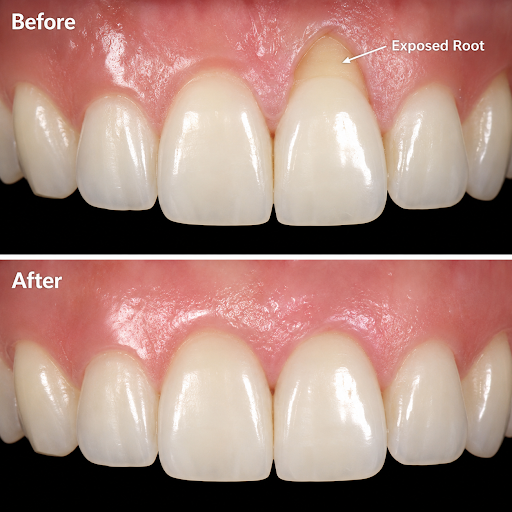
Gums are a protective seal around each tooth. While your gumline can heal from cuts or mild infection, they do not naturally grow back from serious erosion or wear.
When gums pull away, a process known as recession, the tooth root is left exposed. A gum graft rebuilds that barrier, adding support back to the area so the tooth has the protection it needs to stay healthy.
When a tooth root becomes exposed, you may notice real changes. That tooth might suddenly zing with sharp pain when you sip a cold drink, eat something sweet, brush that area, or even breathe in cold air. Some patients describe it as a quick, electric shock that comes and goes. Others feel a dull, nagging soreness right along the gumline.
The exposed root is also more vulnerable to damage. Unlike the crown of your tooth (the part you see), the root has no hard enamel coating. That means it can wear down faster or develop cavities more easily, and root cavities are tricky to fill.
That’s why gum grafting is often recommended as a protective treatment, not just a cosmetic one. It fixes the literal cause instead of just hiding the symptoms.
Not every case of gum recession needs grafting. Some mild recession can be monitored, especially if it is stable and the tooth is not sensitive. In other cases, your dentist or periodontist may recommend gum grafting when recession is progressing, the root is exposed, the tooth is sensitive, or the gum tissue around the tooth is too thin to provide stable support.
You may be a candidate for gum grafting if you have noticed:
Our team will evaluate the area carefully by measuring the gum tissue, checking for inflammation, looking at your bite, reviewing brushing habits, and determining whether gum disease is present. Periodontal disease involves inflammation and infection of the tissues that surround and support the teeth, and the CDC emphasizes that regular dental care and good home care are key to prevention and treatment.
Your exact treatment depends on your needs, the location of the gum recession, and the type of tissue used. In general, gum grafting involves placing a small amount of tissue over or near the receded area to improve coverage and support.
Your dentist may use tissue from another area of your mouth or another approved grafting source. The tissue is carefully positioned and secured so it can heal into place.
Before treatment begins, the area will be numbed by your dentist. During the procedure, you should not feel any sharp pain, just mild pressure, discomfort, and maybe some gentle tugging. Afterward, you will likely have some soreness, tenderness, and swelling while the tissues heal.
To improve your comfort while healing, be sure to follow aftercare instructions closely.
Healing after gum grafting usually happens in stages. In the first few days, the area may feel tender, and you should avoid crunchy or sticky foods that might irritate the grafting site. Based on your treatment, our team may prescribe a medicated rinse or recommend foods to make recovery more comfortable.
As the gum tissue heals, it gradually becomes more stable. The final appearance and coverage will take a few weeks to settle. Your follow-up visits help ensure the area is healing well and that you are comfortable caring for the grafting site at home. If you have any questions or concerns about your treatment, give our office a call at 972-644-1998.
A gum graft can restore support and comfort, but what you do every day still matters. Once the area has healed, our team will show you how to brush gently and effectively without irritating your gumline. A few simple habits go a long way:
If clenching, grinding, crowded teeth, or gum disease played a role in your recession, your dentist may recommend extra steps like a nightguard or orthodontic treatment to lower the risk of future recession.
If you’ve noticed your gums pulling away from your teeth, or sensitivity with certain foods, don’t wait until it becomes painful. Gum recession is much easier to address when caught early.
Gum grafting can help cover exposed roots, reduce sensitivity, and protect your teeth from further damage. More importantly, it gives you a clear, proactive plan for long-term gum and tooth health.
Ready to learn more? Schedule a visit with our team today.